

































































































































A baby Japanese macaque named Punch has taken over social media feeds across the world after videos of him clinging to a stuffed orangutan toy went viral. But behind the adorable clips and the internet’s collective heartbreak, students and animal‑behavior observers are raising concerns about how well the young monkey is being integrated into his group at a Japanese zoo.
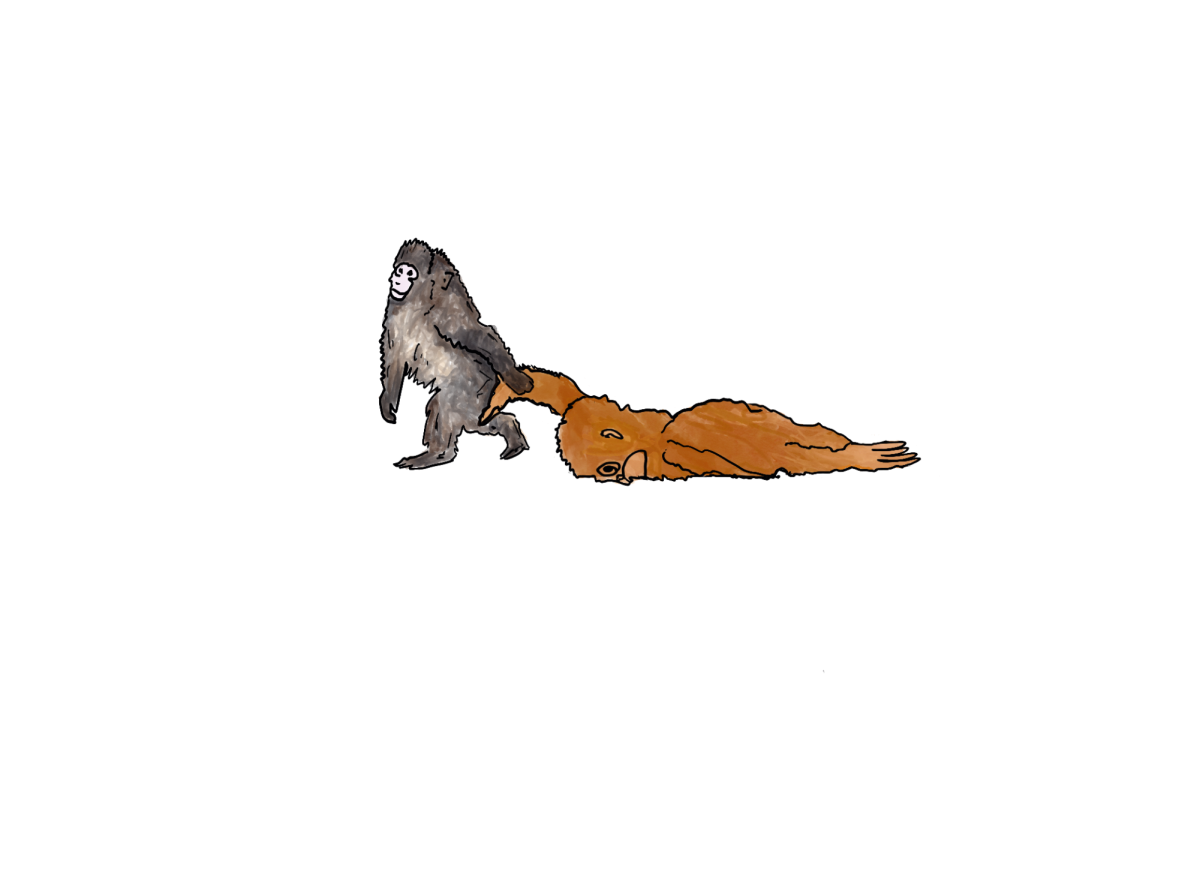
Punch was born in July and abandoned shortly after by his mother, according to the zoo. Keepers gave him a plush orangutan to help reduce stress and provide comfort, a common practice for young primates experiencing separation. But once Punch was introduced into the main enclosure with the other macaques, he struggled to fit in. He was often pushed away, chased or ignored by older monkeys, leading him to run back to the stuffed toy for reassurance.
Punch’s story spread quickly across TikTok, Instagram and X, where millions of viewers expressed sympathy for the young macaque and frustration with the bullying he faced. His attachment to the stuffed orangutan became a symbol of resilience.
“People connected with Punch because he looks genuinely comforted by that stuffed orangutan. It feels really human,” said Carah Sander, a senior Philosophy major.
For many students, the videos of Punch being pushed around by the older macaques were difficult to watch. Some said they felt the zoo should be doing more to help him adjust before placing him into the enclosure full-time.
“I do think it’s messed up that the other monkeys beat him up. Then,when he ran away to hug the toy, that really got me sad,” Sophomore Cybersecurity major Jose Mercedes said. “I’m surprised they put him in there. They should separate him.”
Experts say young monkeys learn communication, grooming behavior and hierarchy by watching and interacting with adults. Without that, they risk developmental delays or becoming overly dependent on humans or objects. But introductions can be complicated, especially for infants without a mother to protect or guide them.
“Early-life experiences are critical for shaping typical adult social behaviors in many animal species, from songbirds to rodents to primates,” said Dr. Sarah Keesom, a Biology professor at Utica University. “Social contact when an animal is young shapes how the animal will respond to members of its own species when it’s an adult.”
Animals act differently if they are socially deprived while growing up, either through a lack of interaction with adults, including parents, or a lack of interaction with animals of the same age, Keesom said. For example, many animals need to have social interactions with members of their own species when they are younger in order to show a preference for social interaction with members of their own species when they are older.
The emotional reaction from viewers and the speed at which Punch became a global symbol have put unusual pressure on the zoo. Many online commenters have called for more updates, more transparency and more reassurance that Punch is being protected. Others argue that the internet is projecting human emotions onto a natural, if uncomfortable, part of the animal world.