






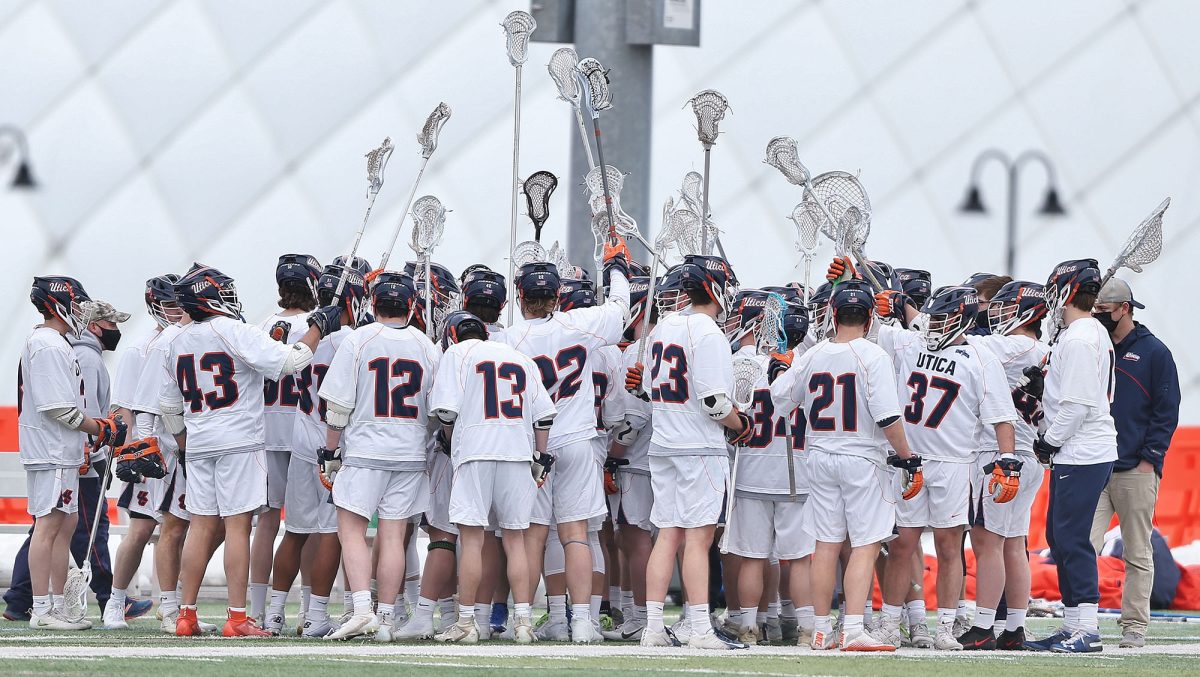






















































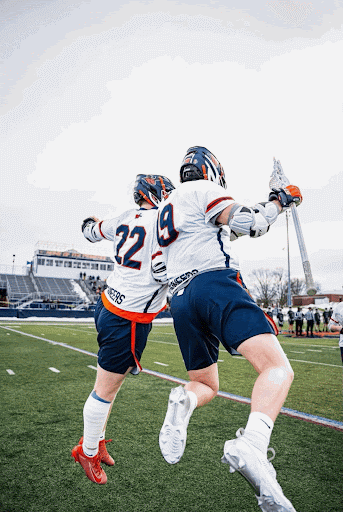






























From the outside, it’s easy to see the Utica men’s lacrosse team as a program on the rise; a group that’s been inches away from breaking a long postseason drought, a group with budding talent that has gelled and improved drastically over the past few seasons. However, from the inside, this tight-knit group still has everything to prove – and nothing to lose.
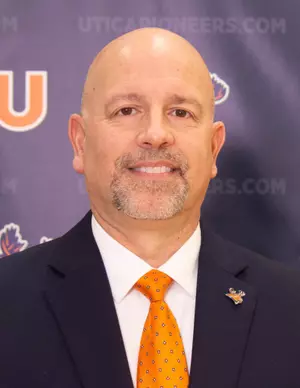
“When we come out and play, we’ve got nothing to lose,” senior captain Noah Erickson said, describing a tight-knit brotherhood that shows up every day determined to do the work together.
As a player who has battled through adversity alongside his teammates and brothers, Erickson gave some insight into one of Utica’s most resurgent programs. For Erickson, this group is more than just teammates or friends, this squad is a brotherhood, one which stood by his side and helped him through some of the toughest times in his journey, helping grow him into a model of leadership and integrity. Their bonds are just one reason why this season, their 25th anniversary season, will be one for the ages.
Finding lacrosse and a team
Noah Erickson, an Auburn native, didn’t grow up with a stick in his hand like many of his teammates. He first found lacrosse through a close group of friends he played basketball with. He joined modified in middle school because he wanted to stay around them and try something new. Unlike most of those teammates who had been playing since kindergarten or first grade, but the game came naturally to him and the need to keep up with their pace accelerated his development. By eighth grade, when his friends moved up to junior varsity, he decided to try out as well. The footwork and dodging he had learned on the basketball court easily translated to the lacrosse field.
By his junior year of high school, Erickson knew he wanted to play in college and study something he cared about. Criminal justice initially drew him toward Utica, and when he saw the program also offered cyber security plus a chance to compete at the Division III level, it felt like the right competitive and academic balance. He reached out to the then head coach Mike Parnell and got a response to set his Utica journey in motion.
Why Utica felt like home
On his visit, Utica checked every box Erickson was looking for. Coach Mike Parnell walked him through the academic halls, showing off criminal justice and cyber security facilities that matched his interests. The Hutton Dome, the Mohawk Valley’s largest indoor practice facility, made an immediate impression on him, as he was accustomed to harsh early-spring practices and relished the opportunity to play indoors during those months. The campus size felt just right to him, not too big, not too small, and the Division III environment offered the chance to compete at a high level without the overwhelming scale of a massive university.
Still, the adjustment to college life was not easy. As an only child who was close with both his parents, Erickson admits the first few weeks away from home left him “all out of whack” before he gradually found a rhythm. He created his own system to stay organized, using a simple notebook to write down each weekday and list the assignments he needed to complete, crossing them off as he went. That structure, combined with the support he eventually felt from upperclassmen who took him in, helped him settle into Utica both as a student and as a teammate.
Growing into a leader on the field
“When I came in my freshman year, I wasn’t very confident,” he said. “I knew that I was a skilled player, but I just didn’t really have the confidence to go out there and do everything that I knew I could.”
When he first arrived, he remembers looking around at older players he felt were better than him and hesitating to fully trust his own game. Over time, that changed as teammates began to rely on him more, telling him he needed to start stepping up and doing the things he knew he was capable of. That trust from the locker room helped unlock his confidence and elevated his play on the field.
Looking back, Erickson said he would tell his first-year self to be patient with that process and trust it. “Those first couple weeks were tough and I really considered, ‘I don’t know if this is for me.’ But once I met people, started playing with everyone and opened up a little bit, I kind of fell into my spot and I loved it.”
Two moments stand out to him when he looks back on his time in a Utica jersey. The first came in a crucial late season matchup against Hartwick last year, with the Pioneers trailing 7-6 and needing a win to push into the playoff picture. Utica called a play they had drilled endlessly in practice, but never before in a game, one that uses an off-ball screen to free a cutter in front of the net. For the first time all year, in arguably the team’s most crucial moment, they ran the play, and fellow Pioneer Ryan Considine caught the pass, burying the shot to tie the game and send it to overtime. Utica ultimately fell in OT, but for Erickson, seeing a play they had rehearsed “a million times” finally work when they needed it remains one of the most electric memories of his career.
This speaks to the trust that this program has in its coaching, its leadership and in each other. To be able to venture confidently into uncharted territory is a testament to what all of those who came before Erickson have built, and a testament to what current head coach Sean Behan has been able to maintain.
His favorite individual goal shows a different side of his competitiveness. In a game against Keuka, he broke his thumb in the opening minutes while fighting for a ground ball but chose to keep playing despite the pain and difficulty gripping his stick. Standing near the crease, he scooped up a loose ball one handed and, drawing on his basketball instincts, flicked in a stylish hook-shot in front of the net. Erickson does not describe himself as a flashy player, but that improvised goal stunned even him, and has stuck with him as one of the coolest plays he has ever made.
Brotherhood through loss
If you ask Erickson about his proudest moment at Utica, he did not mention a goal or a win. During his sophomore year, his mother was diagnosed with stomach cancer and passed away during the season, a devastating loss for him and his family. Despite everything he was going through, Erickson kept coming to games and standing on the sideline with his teammates, staying connected to the group. The program dedicated a game to his mother and his family, a gesture he describes as his proudest moment in a Utica jersey and one he will never forget.
“My proudest moment was when they had a game that was dedicated to my mom and my family,” he said. “Having that feeling of brotherhood and family around me was definitely something I will never forget.”
That experience solidified what Utica men’s lacrosse meant to him. He explained feeling the brotherhood from his first visit, and that bond only deepened when he saw every single player and coach show up to his mother’s services, nearly 50 people from the program there to support him. He insisted the team would respond the same way if any player went through something similar. For Erickson, it is proof that Utica is more than a team; it is a family.
“My family still talks about it to this day … Everyone from the top down was there. It was really something special.” That bond still shows up in his pregame routine. “Even now, she is part of every game with me,” Erickson said. “I have a piece of tape on my helmet that says ‘mom,’ and usually I’ll close my eyes and think about her. She didn’t understand a thing about lacrosse, but she’d be at my games just screaming, and I’ll never forget that.”
The Pioneers’ annual Mike Parnell game is further proof of the brotherhood that had been formed, an annual matchup to honor the legacy of their late coach, who passed away in December 2021. Parnell built the foundation for the culture that now influences each and every Pioneer player, a foundation that’s been built upon by Behan and all of the new players who call Utica home.
Carrying the torch: The legacy of Coach Parnell
Much of this tight-knit culture, Erickson said, goes back to Parnell. As one of the last classes he recruited, Erickson views him as the architect of the program’s identity. Parnell set the tone that everyone has each other’s back on and off campus, and no one is ever left out. In Erickson’s time at Utica, he has never felt like there was a fragmented locker room or a season where the group was not close.
“Parnell has basically built what we stand for as a program. You have everyone’s back no matter what, on and off campus, nobody’s really left out.”
He remembers Parnell as a down to earth, straightforward coach who made expectations clear and brought energy to every conversation, whether in person or on the phone. The impact is so strong that alumni still speak about him with immense respect when they come back and interact with the current team.
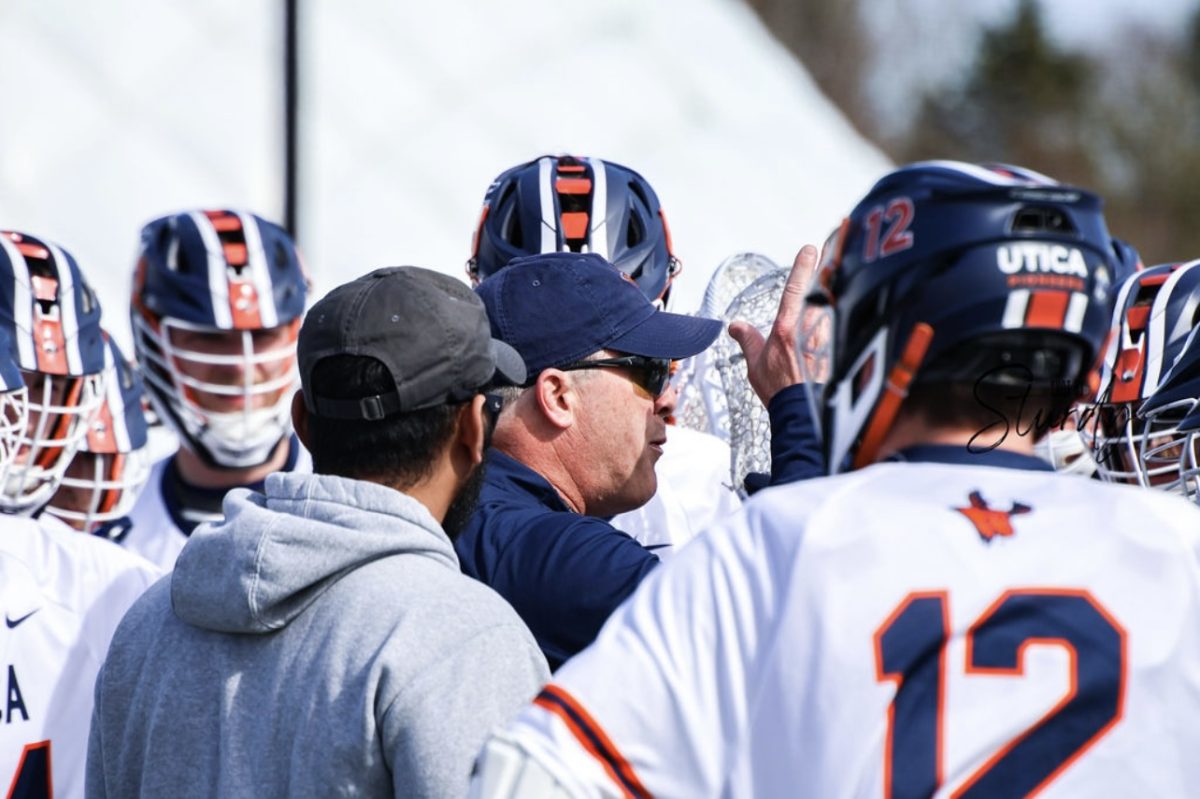
Now, head coach Sean Behan carries that torch as he leads the program forward. Having served as Parnell’s graduate assistant, Behan understands how the program was built and aims to emulate many of those standards while still being his own coach. When mistakes are made, Behan is not afraid to put the team “on the line,” using conditioning not just as punishment but as a lesson that makes players think twice about repeating errors. At the same time, his door is always open; Erickson recalls stopping in his office with no real agenda and ending up talking with Behan for hours. From everything Erickson’s heard about Parnell, he sees the similarities between the two coaches. That continuity of presence and accountability has helped keep the culture strong.
A team with “nothing to lose”
Ask Erickson what makes this year’s group special, and he first mentioned mindset. For nearly a decade, Utica has hovered right on the edge of the conference playoff picture, missing out by the slimmest of margins. Last season alone, the Pioneers dropped a one-goal conference game to Brockport and fell in overtime to Hartwick; two more goals across those contests would have put them into the postseason. Those near misses are constant reminders of how razor-thin the margin can be.
That history has created a mentality that Utica truly has nothing to lose when it steps on the field this season. The team embraces the idea of playing with a chip on its shoulder, bringing edge and urgency into every matchup. Erickson believes it also makes Utica a fun team to watch, especially with a style of play that may look different from some of the established winners in the conference. The Pioneers return every offensive player from last year’s team and have heard opposing coaches comment that Utica “looks dangerous,” which has put them firmly on other programs’ radars. That recognition only fuels their determination to consistently stay at a high-level of play regardless of which team they’re facing.
As they look ahead, Erickson said Behan has a simple way of describing their approach: “We’re basically just gonna be throwing the kitchen sink at everyone, like everything we got.”
The group prides itself on the work it puts in during preseason and offseason, grinding through plays and film to prepare for every scenario. The goal is to attack each game with everything they have, from opening whistle to final horn.
Accountability and daily standards
Within that big-picture mentality sit very specific daily standards. One theme Erickson and the captains hammer home is that the team cannot afford to waste a single practice.
“We need to be on our game every single day that we show up to practice,” Erickson said.
Early in the spring, after a few sessions where energy and focus were not where they needed to be, Erickson sent a message to the group emphasizing that every practice must be treated as an opportunity to get better. The aim was to make the pace and intensity of practices so consistent that games feel like routine extensions of what they do every day.
Team accountability goes beyond the field. When Utica hits a rough patch or has a couple of poor practices, players and coaches will pull everyone into the classroom or locker room to talk through what is going wrong and what needs to change. Over the summer, the team stays connected through Google Meet sessions where they discuss goals for the upcoming season and keep expectations in front of each other. Players also share photos and videos of themselves working out, which may seem minor, but Erickson sees it as a powerful way to show who is putting in the work when no one is watching. Those clips often motivate others to get to the gym, and the habit has been especially helpful for younger players learning what it looks like to prepare at the collegiate level.
“It is about how you play, but another huge part of it is your mindset,” he said.
Erickson is honest about one area the team continues to address; how they approach games where they expect to be favored. In past seasons, Utica has sometimes gone into those contests with the mindset that a win is inevitable, only to find themselves in tighter battles than expected.
He pointed to games like SUNY Poly and Russell Sage last season as examples where, had the Pioneers played with the same intensity they showed against top opponents like Nazareth, the score line might have been completely different. For him, fixing that issue is as much about mentality as it is about execution, reminding teammates that no opponent is going to “just turn over and let you have your way” and that the team must go as hard as possible every time out.
Wearing 44 and the leaders who came before
This fall, Erickson was selected by his teammates as the recipient of the Benjamin Winkler 44 Award, giving him the honor of wearing the number 44 jersey this season. Within Utica men’s lacrosse, 44 is far more than a number. It is given to the player everyone turns to when they need help on the field, guidance off of it, or someone to set the standard. From Erickson’s first year at the program, he knew 44 as “that guy,” the one who leads, supports, and quietly pulls others in the right direction.
“It’s probably the biggest award I’ve really ever had … there’s not much else I would say amounts to it.”
At the team banquet, past 44s from the previous five to eight years came back to congratulate him and take photos, while others who couldn’t attend reached out with calls. Erickson described it as one of the biggest honors he has ever received and says it has been an “unreal pleasure” to be the person younger players look up to.
He credited former teammates like Stephen Queen and Chase Rorick with shaping the leader he has become. Queen, he said, was the hardest working player he has ever met, someone who lived and breathed lacrosse, strength training, and taking care of his body, even though he never held a full-time starting role. Queen’s consistent invitations to go shoot and his ability to have fun and keep a positive attitude regardless of circumstances taught Erickson that effort and energy are non-negotiable, no matter where you sit on the depth chart. Rorick, meanwhile, was one of the most level-headed leaders Erickson has played with, always knowing what to say and how to steady the team during slumps or tough stretches, and reaching out off the field when teammates were struggling. Erickson draws on both examples now as a captain trying to stay calm, composed, and relentlessly focused on the group’s goals.
“Sometimes I think back to him being in the position that I’m in right now, being a captain and someone that people look up to … seeing how calm and collected he was in certain situations has definitely had a huge influence on how I am with the team.”
He hopes his legacy is defined more by how he treated people than by stats. “If I was to have anyone remember me in any sort of way, I hope it’s as someone people could come to about anything,” Erickson said. “I’d like to be remembered the same way I remember Queen and Chase Rorick, as a leader who helped out when we were in a tough time.”
If he had to sum up this year’s leadership in one word, Erickson would choose “grit.” The captains pride themselves on showing up every day, going 100 percent 100 percent of the time even when they make mistakes, and being a constant voice on the field when energy or communication starts to dip. No one is allowed to stay quiet and hope someone else steps up; they all share responsibility for keeping the group aligned with where they want to go this season. “If you’re gonna make a mistake, you make a mistake going 100%. Don’t do it just going through the motions.”
The student athlete routine
Off the field, Erickson’s life is busy and structured. As a cyber security major, all the remaining classes he needs to graduate are online, so he starts most days at his desk, moving through assignments on his computer and monitor set up. After a productive hour or two of schoolwork, he heads to campus, arriving roughly 90 minutes before practice to spend in the training room rehabbing his ankles. He estimates he is in the training room for more than an hour a day, making sure his body is ready to handle the demands of the season.
Outside of lacrosse and academics, Erickson leans into his love of the outdoors and cooking.
When he is not in class or at practice, Erickson gravitates toward teammates and familiar campus spots. “A lot of us hang out regularly … we’ve got a few different houses within the team, so everyone’s kind of everywhere, but we all get together and watch movies and do the stuff college kids do,” he said. “On campus I spend a lot of time in the café. I’ve got a commuter plan, so sometimes I’ll sit there for an hour or two and just see different groups of guys cycle in and out. It’s a chance to talk to everyone and hang out.”
He hunts and fishes and often cooks venison and other game from his freezer after long practices, something he looks forward to at the end of the day.
“Outside of school and when I’m home, the outdoors is a huge part of my life,” Erickson said. “I love being in the middle of nowhere, hiking, hunting, fishing, it’s something I’ve been doing with my family for years, and it has shaped who I am.”
Growing up in Auburn, a tight-knit small town west of Syracuse, only reinforced that appreciation for being outside and having a close community.
Professors have also played a key role in his experience as a student athlete. He points to faculty members like Mike Roberts, Utica’s Vice President of IITS, who has connected him with professional contacts in cyber security, and Leslie Corbo, Associate Professor of Cybersecurity, who supports students with resume help and career guidance. He also acknowledged Philosophy Professor Christopher Riddle, who was especially understanding and flexible when Erickson was dealing with his mother’s illness, encouraging him to take the time he needed while still finishing his work.
Another influence is English Professor John Cormican, a demanding instructor who never hesitated to be direct when something was off but also pushed students to be their best. Erickson values those relationships and encourages other students to show up, attend office hours, and talk to the professors so they can build the same kind of support system.
Looking ahead
“Every year that I’ve been here we’ve talked about winning and making it to the playoffs,” he said. “Having last season end the way it did lit a fire under us because we know what we’re capable of if we just put our minds to it. I really believe this is the year we make the push, so that next year and the year after that, playoffs are the standard. We’re not just a team that plays games and goes home.”
As this season moves forward, the goals for Utica men’s lacrosse are clear. The top priority is to break through and make the conference playoffs after years of coming painfully close. Along with that, the Pioneers want to pose a winning record, which means treating early non-conference games with the same urgency as late-season contests and keeping the “pedal to the metal” from day one. With virtually the entire offense returning and a tight knit culture, Erickson believes they will be a team that is both dangerous and exciting to watch.
“I think something that makes us different is that family aspect … something you can’t take away from this team is that we’re just a family.”
At the center of it all is the brotherhood that has defined his Utica career. From the first time he picked up a stick to the moment he slipped on the 44 jersey, Erickson has grown into the kind of leader the program counts on, but he is quick to point back to the teammates, coaches, and professors who helped him along the way. For him, and his entire team, it all comes back to the simple idea: a family with nothing to lose, willing to give everything for each other every time they step on the field.
He added: “If I can do anything for this team, it’s going to be helping this team get to the playoffs so that people can say, ‘You guys are here and ready to play.’”