



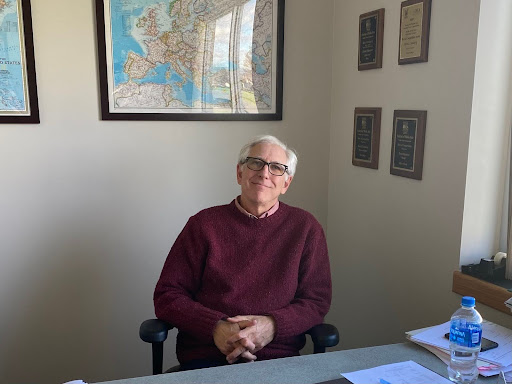
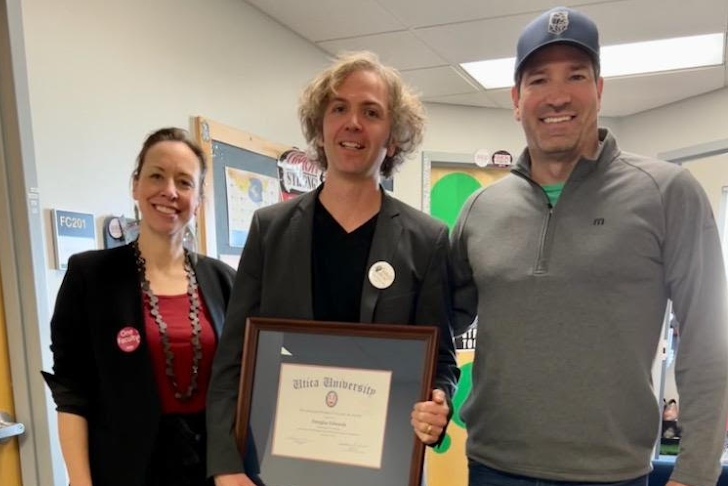






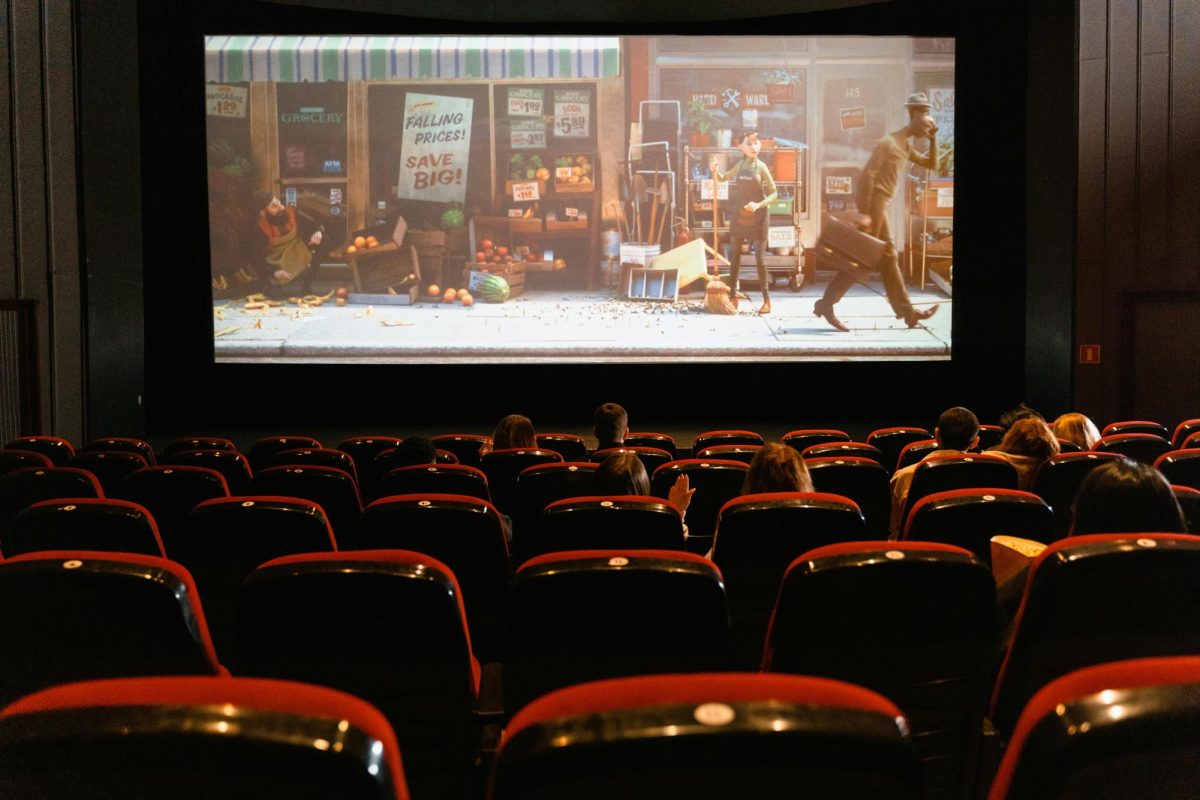




























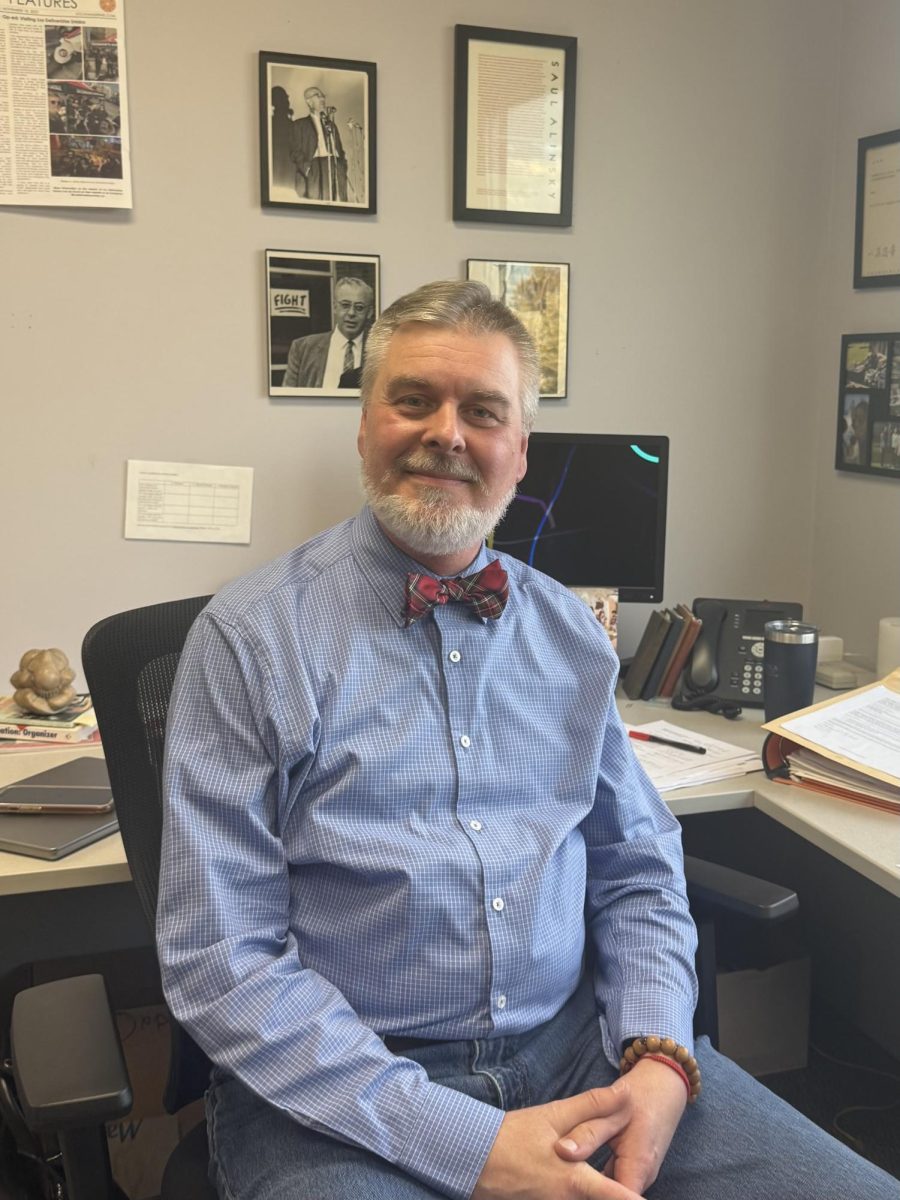
For 26 years, Thursday evenings at Utica University meant gathering in a dark room to watch something unfamiliar, challenging or quietly moving. These screenings, led by Communication Professor Jeff Miller through his Films on Thursday series, officially came to an end this fall.
The close of the program marks more than the end of a campus tradition. It marks the conclusion of a project that shaped how generations of students experienced cinema.
Miller began running the series in 1999, not long after joining the university. He remembers the pressure that came with inheriting it.
“It was very intimidating running the film series after Scott MacDonald,” Miller said. “He had a very clear expertise and I knew I wasn’t going to be able to duplicate that. I had to fall back on my own strengths.”
At the time, international films were harder to find in the United States and especially in cities the size of Utica. Miller said this challenge influenced the identity of the series.
“It was very difficult to book foreign films in the United States,” he said. “One thing that helped me was creating a course to run alongside the film series. That helped me articulate my choices. Once I wrote the syllabus I was able to put into words what I was looking for. They didn’t have to be international, but I tried to find films that were not being shown in Utica.”
His goal was simple: to select films that stayed with students long after they left the screening.
“I wanted my students to wake up the next morning still thinking about the films we watched,” he said.
One stand out showing came during a screening of the documentary “Burma VJ,” which follows the pro-democracy protests in Myanmar.
Before the film, Miller invited a local Buddhist abbot who had lived through the events depicted to speak. He described being pursued across the country by the military before finding refuge in the United States. He spoke through interpreters to the small room of students.
Then the film began. At one point, footage showed the abbot in the middle of a massive demonstration, speaking to a crowd of people.
“I’m looking around and my students are looking at him in the front row while he’s on the big screen,” Miller said. “I found it a very profound moment.”
Miller said selecting and arranging the films each semester became its own craft.
“Curating the film series helped me develop a sense of grammar on how to combine films into an eight week series,” he said. “It wasn’t always obvious to others what I was doing, but often I was scheduling films in a particular order for a larger effect.”
Certain directors became consistent presences in his programming, including French filmmaker Laurent Cantet.
“Terrific stuff,” Miller said. “His films played with very big ideas but often focused on small relationships.”
As the years went on, campus culture shifted. The change was gradual but noticeable.
“I have to say students are not the same as they were twenty years ago,” he said. “The university has become increasingly career oriented and many of our majors leave very little room for any sort of elective classes. Teaching a one credit course that didn’t satisfy gen ed and didn’t satisfy any majors made the course become a kind of orphan.”
He said that while students still care about movies, the way they interact with them has changed.
“You all like movies,” he said. “Except I see you watching them on your phone, and it breaks my heart.”
Still, some students expressed gratitude.
“In the last couple of semesters students have left me notes and sent me emails thanking me for having an opportunity to do something like that here because their majors were so demanding that they were longing for an experience like that,” he said.
Budget cuts, however, made the decision to stop unavoidable. A grant application he relied on was denied. Meanwhile, campus budgets tightened.
“They cut my budget to the point I simply didn’t have enough money to show two eight-week film series in the year, ” Miller said.
With resources limited and fewer students able to enroll, continuing the program no longer felt sustainable.
“It’s time to do something new,” Miller said.
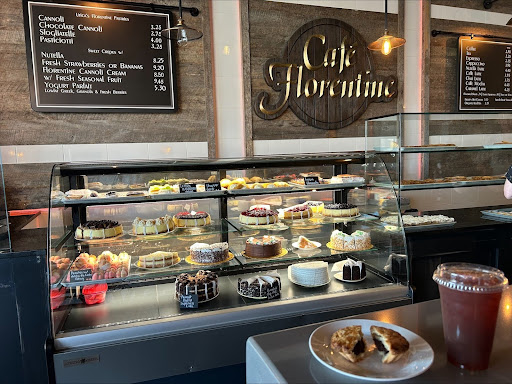
Miller has already begun that next chapter. Over the summer, he opened a micro bookstore called the Little Red Book Store inside The Tramontane Café.
“Instead of curating films I’m now curating a collection of books,” he said.
He also returned to making visual art, with pieces selected for exhibitions at the Mohawk Valley Center for the Arts and the Red House. Alongside that, he has been building a website devoted to his research on redlining and housing covenants.
“I feel like somebody took the leash off of me,” Miller said.“I suddenly have these really big projects but now I feel like I have the time to do that.”
Certain films remain especially meaningful to him years later. He recalled showing “Three Seasons,” in which a Vietnam veteran returns to search for a daughter he never knew. “The scene where he recognizes his daughter is so absolutely heartbreaking,” he said.
A film he thinks everyone should watch at least once?
“‘The Umbrellas of Cherbourg,’” Miller said. “I fell in love with it the first semester I ran this class and I showed it again as my last film this semester too.”
Looking ahead, Professor Paul MacArthur will continue the film series next semester.
“It’s not my baby anymore,” Miller said. “Mine grew up and moved out of the house.”