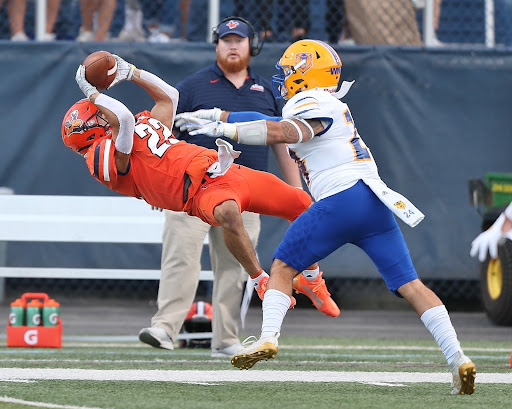

















































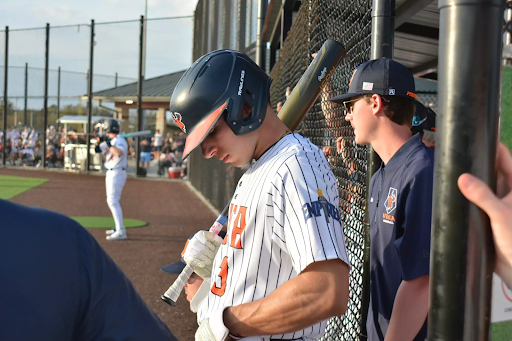


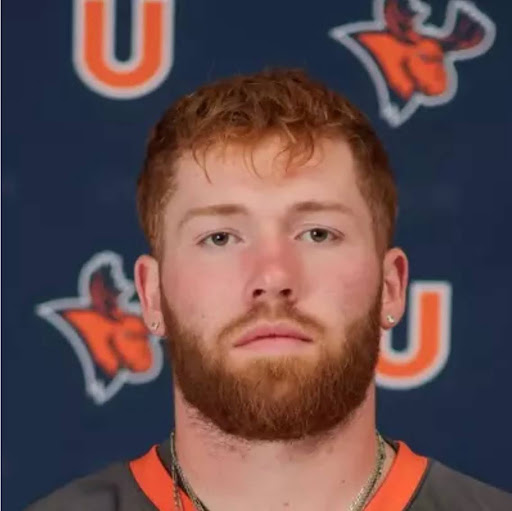




































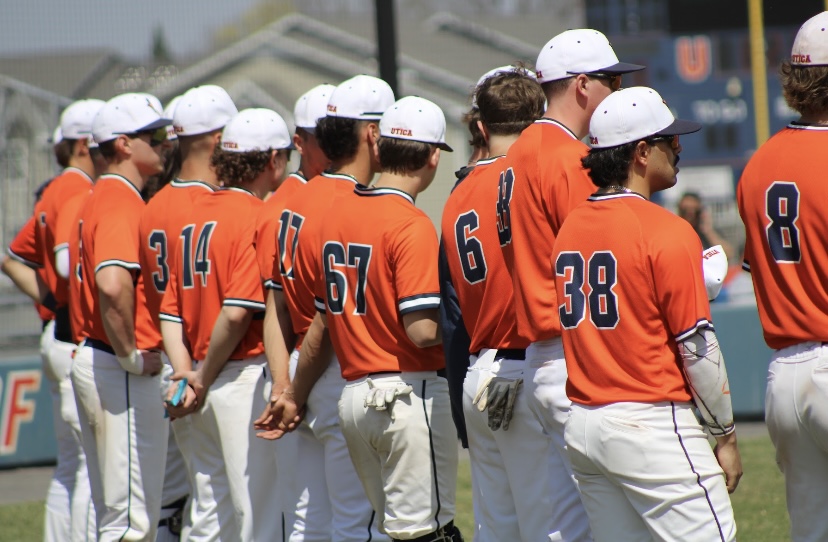







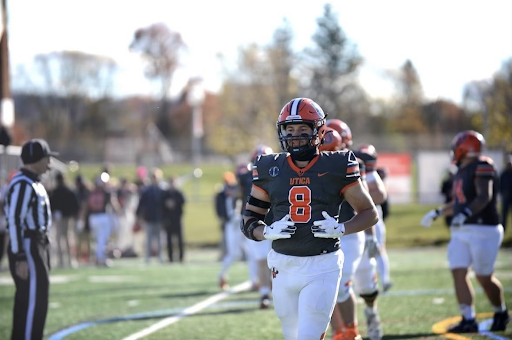
On Saturday afternoons at Gaetano Stadium, Lorenzo Velez lines up wide, glances toward the sideline for the signal and gets into his stance with a calm that once seemed impossible.
The junior wideout did not always see himself here — not after a lonely and long freshman training camp, not after a sophomore season spent on junior varsity, and certainly not during the moments he considered walking away from football altogether.
But last season, Velez earned a starting role.
“I didn’t expect to start,” he said. “I just wanted an opportunity.”
Football has been a part of Velez’s life since his youth. He fell in love with the sport early, lured by its speed and unpredictability. Football made him feel free, he said — something different from any other sport he played.
For most of his childhood, Velez spent his time in the backfield as a running back. It wasn’t until eighth grade that he made the switch to wide receiver, a transition that required learning how to run routes, learn new footwork and timing. In high school, he took on defensive responsibilities as well, playing both safety and cornerback, expanding his knowledge of the game from multiple angles.
That adaptability would become essential at the collegiate level.
The jump to college tested him in ways he did not anticipate. From managing coursework, practices, film sessions and the mental stress of exams and game preparation, it quickly became overwhelming for him.
“Balancing school and football is one of the biggest challenges,” Velez said. “You’re dealing with practice and homework, but also the stress from tests and games.”
His freshman year brought another obstacle. Just days into training camp, his roommate, one of his only close friends on the team at the time, left school. Suddenly, Velez found himself navigating the tough early part of his college career alone.
The isolation lingered through camp and into the season.
Sophomore year had its own obstacles as well. Velez remained on junior varsity and did not see the varsity lineup. Doubt crept in, making him question whether he would ever see the field on Saturdays.
“I thought about quitting,” he said. “I almost did.”
Instead, he stayed.
Velez focused on gradual improvement — getting stronger in the weight room, faster on the field and sharper in his technique. More importantly, he adjusted his mindset. He learned to stay composed when mistakes happened in practice or games, refusing to let frustration rattle him.
That mental shift paid off.
Last season, Velez earned a starting job and delivered what he described as a solid performance. While he believes he could have played an even larger role, the experience validated the work he put in during the years he struggled.
“It showed me that nothing is given,” he said. “Everything is earned. If you don’t put in the time, you won’t get the results you want.”
His feelings about Utica have been mixed. At times, he said, he has struggled with the limited social scene. Yet, he values the relationships he has built and the lessons he has learned thus far at Utica.
Looking ahead, Velez plans to finish his college career, then pursue coaching for a semester or a year before becoming a teacher and high school coach. His goal is to guide young athletes through the same doubts and growing pains he once faced.
If his journey has taught him anything, it is that progress rarely comes quickly, but it comes to those who stay the course.
And for Lorenzo Velez, staying made all the difference, as his decision to not quit paid off.